
- Fast & Tracked US Shipping On All Full Systems
- Cheapest Worldwide Delivery Rates Anywhere
- Sign in

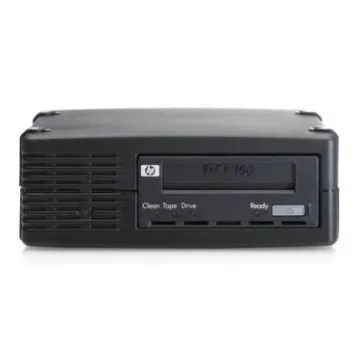
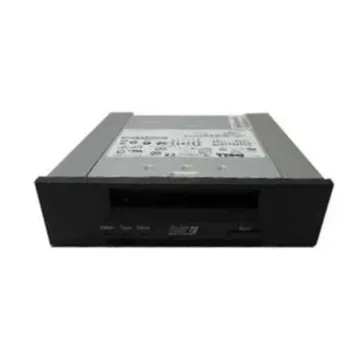
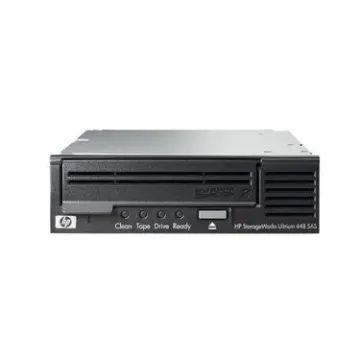
Buy Tape Drives for Reliable Offline Data Protection
Buy tape drives from BulkDevices when you need true offline immunity. Hard drives do not crash; the cloud is still an unreachable goal for hackers. To ensure that your data survives a ransomware attack, fire, or silent corruption by your controller, you have to write to magnetic tape. It is a proven technology to create an immutable, offline copy of your most critical assets, no power, no network connection, no vulnerability. Whether you are securing financial audits or recovering legacy archives, our certified tape drives for sale deliver the 30-year shelf life that SSDs and HDDs cannot promise. BulkDevices bridges legacy infrastructure with modern compliance.
Understanding LTO Tape Drive Technology
Linear Tape-Open (LTO) remains the only storage medium with a verified 30-year shelf life, making an LTO tape drive mandatory for legal, medical, and archival compliance. Each generation (LTO-6 through LTO-9) doubles native capacity and write speed while maintaining backward read capability (two generations) and backward write (one generation). An lto tape drive performs a critical function: it writes data in a serpentine pattern across 1,280 tracks simultaneously, ensuring redundancy even if a section of tape degrades. As the foundational component of our Backup Drives category, a data tape drive offers bit-error rates (10^-19) that are 1,000 times better than enterprise SSDs, making it irreplaceable for SEC and HIPAA-mandated audit trails.Internal vs. External Tape Drive Form Factors
The right choice of the form factor is solely based on your physical server architecture and recovery mobility requirements.
- Internal Drives (5.25-inch bay): An enterprise tape drive slides directly into a front hot-swap bay of a server, which does not occupy any additional rack unit and is powered directly by the backplane to reduce the clutter of power cables.
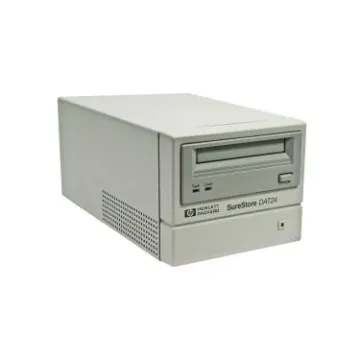
- External Drives (Tabletop): The same mechanism is stored in a rugged enclosure in the external tape drive, and is available to a single administrator to share the same backup unit across three different legacy servers using long SAS cables.
- SAS Connectivity: Both form factors need a dedicated SAS Host Bus Adapter; in this case, you cannot use USB-to-SATA adapters. The drive supports 12Gbps SAS handshaking to support streaming writes.
Top Brands: HP, IBM, Quantum, Dell, and Tandberg
The LTO ecosystem can be characterized in terms of five engineering philosophies. An HP LTO tape drive (StoreEver) capitalizes on dynamic head cleaning (uncommon among competitors) and eliminates 60% of the required full manual cycle cleaning.The tape drive, which serves as the technology founder, is the IBM tape drive (TS Series), which manufactures the raw tape head mechanisms, which are rebadged by third parties to serve in their libraries. In the case of motion picture archiving, a Quantum tape drive is considered the media choice, optimised to sustain 360 MB/s writes without stuttering, when scanning 12 TB of uncompressed film.
A native Windows Server Backup integration should be deployed by an SMB using a Dell tape drive (PowerVault), which ships with ready-to-use LTFS drivers. Lastly, the Tandberg tape drive has an advantage in the harsh environment (humidity, dust) because it has a stronger load/eject mechanism, hence it is the preferred choice of the recovery unit in the field during the data collection exercise in mining and oil exploration.
Frequently Asked Questions(FAQs)
Can I just plug a tape drive into a USB port?No. Enterprise tape drives require a direct SAS (Serial Attached SCSI) connection. USB lacks the continuous streaming protocol; a single USB interrupt will snap the tape tension, causing a write error and forcing a full rewind.
What is "WORM" capability?
“Write Once, Read Many” is a cartridge-level flag that prevents overwriting or deletion after data is committed. This is mandatory for SEC Rule 17a-4(f) and financial audit trails, as the drive physically refuses to erase the media.
Do I need to clean the tape drive?
Yes. Tape heads contact the media surface directly. Run a cleaning cartridge every 25 hours of use or when the front-panel “Clean” LED illuminates. Failure to clean causes cyclic redundancy check (CRC) errors and permanent head degradation.
Why Buy From BulkDevices?
We do not simply resell tape drives; we re-certify them. Each unit undergoes head-alignment calibration, roller torque testing, and a full write/read pass on an oscilloscope. Need to recover data from an LTO-3 cartridge? We stock legacy LTO-4/5 mechanisms for data rescue operations. For disaster recovery, we offer 24-hour expedited shipping on all SAS external drives.