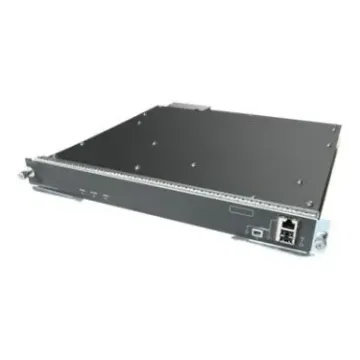
Wireless LAN Controllers

Buy Wireless LAN Controller Appliances for Centralized Management

Buy wireless LAN controller solutions from BulkDevices to simplify complex network operations and ensure consistent performance across all locations. It becomes inefficient and prone to errors very fast to handle dozens or hundreds of access points separately. A dedicated controller acts as the central brain of the network, instantly pushing configurations, updates, and security policies and control performance through a single interface. This is a wireless network controller solution that uses less manual configuration and enhances visibility, scalability, and security of contemporary enterprise setups.

A centralized wifi controller is able to solve these problems by intelligently controlling radio frequencies and transmitting power on the network. It is constantly analyzing and optimizing the real-time performance. Most importantly, it makes sure that there is seamless roaming among all your wireless access points, whereby people can move freely without interruptions. This is essential in applications such as VoIP, video conferencing, and cloud-based workflows where the slightest interruption can affect productivity and business.

Scaling with an Enterprise WLAN Controller

The selection of the appropriate controller will rely on your environment size and complexity. An enterprise WLAN controller should be able to match the number of access points, users, and performance needs in your infrastructure.
  • University campuses are dependent on controllers to serve thousands of students at once, as they connect across lectures, dormitories, and libraries, and retain an authenticated Eduroam connection and continuous interoperability between buildings.
  • Hospitals need highly dependable connectivity where medical equipment and staff communication are based on zero-latency roaming, as well as encrypted tunnels that secure confidential patient records and guarantee complete adherence to healthcare standards.
  • Large retail stores and warehouses rely on controllers to enable the use of old barcode scanners, mobile POS, and inventory tracking equipment to maintain seamless connectivity across expansive areas with near uniform coverage and availability.
A properly selected WLAN controller ensures long-term scalability, consistent performance, and centralized control, eliminating the need for frequent infrastructure upgrades while simplifying management across complex enterprise environments.

Top Brands: Cisco, Aruba, Ruckus, Huawei, and Ubiquiti

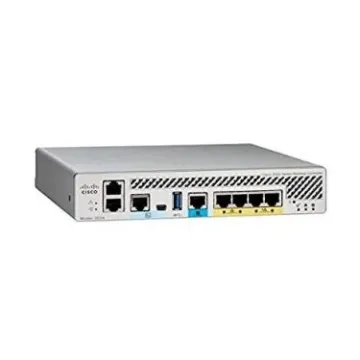
Leading networking vendors have built powerful controller ecosystems, each optimized for specific enterprise environments and operational priorities. The Cisco WLAN controller, especially the Catalyst 9800 series, is well known to provide high security, automation, and scale to large organizations and mission-critical systems.

The Aruba WLAN controller is also referred to as the Mobility Master because it works very well in dynamic BYOD environments, where users can easily connect multiple personal devices in a secure fashion without compromising performance or policy enforcement.

In the high-density deployments, the Ruckus WLAN controller is unique with its SmartZone platform, which is used to ensure stable connectivity in stadiums, event venues, and other areas with thousands of users simultaneously.

The Huawei WLAN controller provides carrier-grade throughput and reliability, making it suitable for telecom-grade networks and large-scale infrastructure deployments requiring consistent high-speed performance.

Meanwhile, the Ubiquiti WLAN controller offers a cost-effective alternative for small and medium businesses, delivering a software-defined networking experience through compact hardware like the Cloud Key, simplifying deployment and management.

Hardware vs. Cloud Management

Although cloud-based management platforms continue to gain adoption, hardware controllers are still desired by organizations that value their security and control. Finance, defense, and government industries need on-premise management to store sensitive data in the local network. Hardware controllers ensure that all communication remains encrypted and internal, reducing exposure to external threats. For optimal performance, organizations can connect their controller directly to their core network switches, minimizing latency and ensuring fast response times. This architecture provides greater reliability, compliance, and operational confidence compared to fully cloud-dependent solutions.

(FAQs)

How many Access Points can one controller manage?
The number of supported access points varies by controller model and licensing. Entry-level controllers typically support between 25 and 50 access points, while high-end enterprise systems can scale up to 6,000 access points and support over 64,000 concurrent client devices.

What happens if the controller fails?
In most deployments, access points automatically switch to a standalone mode, continuing to pass network traffic without interruption. However, advanced features like seamless roaming and new client authentication may be affected. To prevent downtime, deploying controllers in high-availability pairs is strongly recommended.

Do I need licenses for my controller?
Yes, most enterprise-grade controllers require licensing based on the number of managed access points. Vendors such as Cisco and Aruba typically enforce per-device licensing models, ensuring that each connected access point is authorized and fully supported within the controller ecosystem.

Why Buy From BulkDevices?

BulkDevices offers a comprehensive selection of wireless controllers tailored for every deployment scenario. Whether you need refurbished units for cost-effective expansion or brand-new hardware for fresh installations, the platform supports flexible purchasing. With global shipping capabilities, BulkDevices enables seamless multi-site deployments while maintaining consistent quality and availability.