





WAN Adapters
-

EHWIC-VA-DSL-M-RF - Cisco 1-Ports VDSL2/ADSL2+ WAN Interface Card
SKU: EHWIC-VA-DSL-M-RF
Brand: Cisco
$346.95Savings:0.00 -
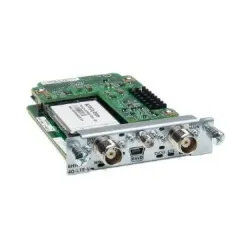
EHWIC-4G-LTE-AT - Cisco 4G LTE WWAN EHWIC for Cisco ISR G2
SKU: EHWIC-4G-LTE-AT
Brand: Cisco
$105.00Savings:0.00 -
EHWIC-3G-EVDO-S= - Cisco 3G wireless Enhanced High-Speed WAN Interface Card
SKU: EHWIC-3G-EVDO-S=
Brand: Cisco
$772.74Savings:0.00 -
HWIC-1VDSL - Cisco VDSL2 High-Speed WAN Interface Card
SKU: HWIC-1VDSL
Brand: Cisco
Savings:0.00 -
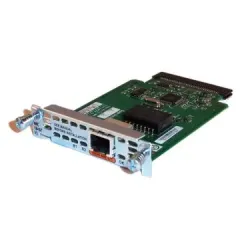
WIC-1B-S/T-V3= - Cisco 1-Port ISDN BRI (S/T) WAN Interface Card
SKU: WIC-1B-S/T-V3=
Brand: Cisco
$150.51Savings:0.00 -
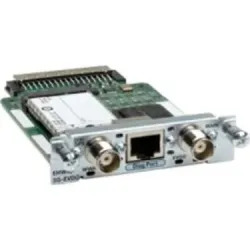
EHWIC-3G-EVDO-S - Cisco 3G Wireless Enhanced High-Speed WAN Interface Card
SKU: EHWIC-3G-EVDO-S
Brand: Cisco
$224.71Savings:0.00 -
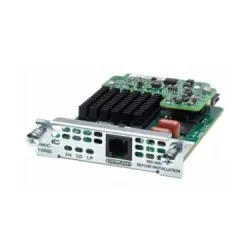
EHWIC-VA-DSL-B-RF - Cisco 1-Port VDSL2 & ADSL2/2+ WAN Interface Card
SKU: EHWIC-VA-DSL-B-RF
Brand: Cisco
Savings:0.00 -

EHWIC-VA-DSL-A-RF - Cisco 1-Port High-Speed WAN Interface Card
SKU: EHWIC-VA-DSL-A-RF
Brand: Cisco
$281.41Savings:0.00 -

HWIC-3G-HSPA-A-RF - Cisco 4-Band 3G/2G 2100MHz Wireless Interface Card
SKU: HWIC-3G-HSPA-A-RF
Brand: Cisco
Savings:0.00

Featured Products


Buy Network Modules to Future-Proof Your Infrastructure
Buy network modules to extend the performance and lifespan of your existing networking equipment without costly full-system upgrades. Businesses can efficiently scale infrastructure without unnecessary capital spending with solutions from BulkDevices. Modular upgrades involve adding new functionality to existing hardware rather than replacing the entire chassis, allowing you to upgrade capacity while avoiding the cost of entirely new systems. This will not just save you the downtime but also make sure that your systems are not fixed to any specific connectivity requirements. Network modules are a smart investment for organizations that wish to remain competitive and yet remain cost-effective and able to flex their operations.The Versatility of Modular Networking Hardware
The limits of traditional fixed networking devices are that the port configurations are hard-coded once they are sold. Although they might seem to be cost-effective in the short-term, they tend to be limiting in the light of increasing network requirements. Modular networking hardware, on the other hand, is more dynamic as it enables businesses to tailor their devices as needs change.E.g., you would start with copper-based connections and upgrade to fiber without needing to replace the whole system. Such flexibility has made modular solutions the best choice to expand businesses that foresee variations in their bandwidth or connectivity requirements. In the case of switching layers, specialized switch expansion modules are used to provide uplinks at high speed and stacking, allowing scalability to work smoothly. Finally, modular designs enable IT departments to react fast to changes in technology and still achieve an effective use of resources.
Categories of Network Interface Modules
The current infrastructures are based on a wide variety of network interface modules, which are intended to meet the operational needs and environmental requirements.- Router Interface Cards (WAN): These cards are used to connect enterprise routers to external networks, such as T1/E1, DSL, or 4G LTE, so that the connections will always be available in case the primary ISP connections suffer unexpected failures.
- Switching Modules: Ethernet modules designed to fit chassis switches allow organizations to add hundreds of Ethernet ports immediately, facilitating large-scale deployments and boosting performance in data-intensive environments.
- Service Modules: Advanced processing units that offload dedicated services like firewall security, wireless control, or voice processing, so that the core router CPU is left to concentrate on core routing functions without performance impact.
Top Brands: Cisco, Juniper, HP and Dell
When crafting scalable network architectures, it is crucial to select the appropriate brand ecosystem. Cisco network modules have been widely accepted as the industry standard and have provided unparalleled compatibility with their ISR router product lineup, with various form factors like NIM, SM-X, and HWIC. This scalability ensures that Cisco is the solution of choice in companies that want scalability in the long term.Conversely, Juniper network modules and Huawei network modules are designed to meet high-performance environments, especially in service provider networks. The solutions provide carrier-grade performance and huge throughput, and are suitable for large-scale and telecom applications.
In the meantime, HP network modules and Dell network modules are focused on data center flexibility. Their designs are usually focused on the open standards and interoperability, in order to be able to integrate smoothly across the various platforms. This method is particularly useful in companies operating hybrid infrastructures or going about to adopt up-to-date data center infrastructure.
Understanding Compatibility and Form Factors
Compatibility is a significant consideration in the choice of the modules since not all components are universal. The various devices take in different types of slots, and the inappropriate use of a module can result in either failure in operation or total incompatibility. An example is that a Network Interface Module (NIM) cannot be inserted in a slot of an older slot in an Enhanced High-Speed WAN Interface Card (EHWIC).It is always important to make sure that you know your hardware specifications and the types of modules that your device supports before buying. Furthermore, numerous modules will not work without Transceiver optics; be sure to use the SFP type that matches the module. Planning will help avoid expensive errors and achieve maximum performance in your network infrastructure.
Specialized Solutions: WAN Adapters and Print Servers
Connection sometimes needs niche protocols. You may be required to communicate with a certain Wide Area Network circuit or even share a plotter of yesteryear. These special boxes help you to save on purchasing a new set of equipment altogether since they convert what you already have. Connect to special external networks with our variety of WAN adapters, which are used to support non-standard serial connections. Likewise, make any USB printer a shared office item using network print servers to essentially avoid host-based printing and decrease workstation dependency.Frequently Asked Questions (FAQs)
What is a "Service Module"?A Service Module is more than a simple interface card. It includes its own processor and memory, allowing it to run specialized applications like firewalls, intrusion detection systems, or wireless controllers independently. This design reduces the workload on the router’s main CPU, improving overall network performance.
Can I use a module from a different brand?
In most cases, no. Network modules are typically proprietary and designed specifically for the manufacturer’s hardware ecosystem. For example, a Cisco module will not function in a Juniper device. Always ensure compatibility with your existing equipment before making a purchase decision.
Is it better to upgrade a module or buy a new router?
Upgrading a module is often the more cost-effective solution, typically saving up to 80% compared to purchasing a new router. However, this depends on whether your existing chassis can support the speed and capabilities of the newer module technology.